
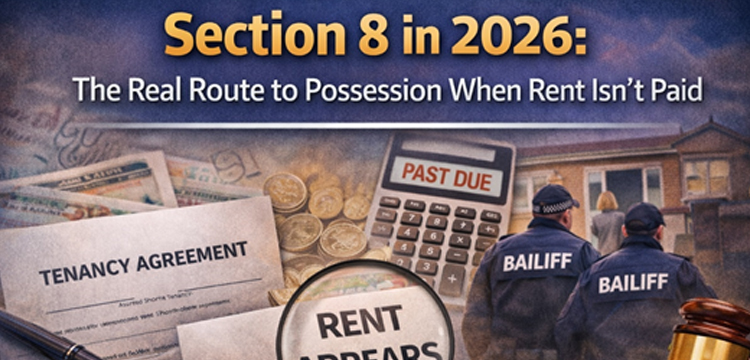
With growing uncertainty about when Section 21 will be scrapped, landlords across the UK are focusing on one key route: Section 8 eviction. If your tenant is in rent arrears, understanding the correct legal process is critical.
When a Tenant Is Not Paying Rent
If you are facing a situation where a tenant may be evicted for not paying rent, the starting point is usually a Section 8 eviction notice. This formal notice sets out the legal grounds, often based on serious or persistent rent arrears. It must be completed accurately and served correctly.
If the tenant does not leave after notice expires, you must apply for a possession order through the court. Many landlords now use possession claim gov uk PCOL (Possession Claim Online), which allows applications to be filed digitally. Accuracy in paperwork avoids costly delays.
The Importance of the Right Agreement
Your success often depends on the quality of your tenancy contracts UK documentation. Whether you used a tenancy agreement template UK free PDF GOV, a UK tenancy agreement template PDF, or an NLA tenancy agreement PDF, it must reflect current legal standards. Outdated agreements create risk.
In 2026, landlords should review every new tenancy agreement they issue. Options range from a short term tenancy agreement template to a full house tenancy agreement template, but compliance is essential. Many landlords search for a tenancy agreement template UK free PDF, yet not all templates meet legal requirements.
Scotland and Wales: Different Rules
If you have a tenant not paying rent Scotland, the process differs significantly. Likewise, evicting tenants in Wales involves distinct statutory requirements. Section 8 terminology may not apply in the same way outside England.
Common Misunderstandings
Landlords sometimes ask, “How can I get my neighbour evicted?” The reality is that only the landlord or property owner can pursue lawful possession. A neighbour cannot initiate eviction proceedings.
Finally, before taking action, consider early rent arrears help and communication. A structured approach protects your position and strengthens your case if court action becomes unavoidable.
