
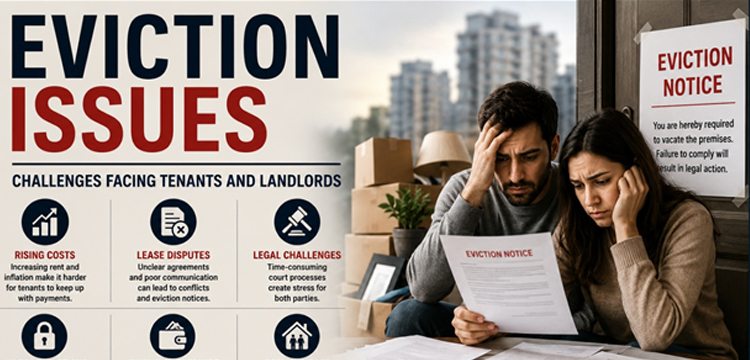
Eviction issues have become increasingly common in today’s housing market as economic pressures continue to affect both tenants and landlords. Rising rental prices, inflation, and unstable employment conditions have made it difficult for many families to maintain regular rent payments. As a result, eviction cases are increasing in many cities around the world, creating financial hardship, housing insecurity, and legal disputes. In 2026, eviction is no longer viewed as simply a legal matter but as a major social and economic concern affecting communities on a larger scale.
One of the main reasons behind growing eviction problems is the lack of affordable housing. In many urban areas, rental costs have increased significantly while household incomes have remained relatively stagnant. Families already struggling with daily expenses often find it difficult to keep up with rent, especially during unexpected financial emergencies such as medical expenses, job loss, or business downturns. Even a short delay in rent payments can place tenants at risk of receiving eviction notices and losing stable housing.
Another major issue involves misunderstandings and disputes between landlords and tenants. Many eviction cases arise due to unclear lease agreements, maintenance responsibilities, or communication failures. Some tenants may not fully understand the conditions of their rental contracts, while landlords may face frustration over unpaid rent or property damage. Without proper communication and legal guidance, these disputes can quickly escalate into lengthy court cases and forced removals.
Illegal eviction practices have also become a serious concern in recent years. In some situations, landlords attempt to remove tenants without following proper legal procedures by changing locks, disconnecting utilities, or pressuring occupants to leave. Such actions are unlawful in many countries and can lead to legal consequences. Unfortunately, many tenants are unaware of their rights and may not know how to seek legal protection against unfair treatment or harassment.
Landlords also face significant challenges during eviction situations. Many property owners rely on rental income to cover mortgages, maintenance costs, taxes, and other financial obligations. When tenants fail to pay rent for extended periods, landlords may experience severe financial pressure. Additionally, legal eviction processes can be expensive and time-consuming, with court proceedings often taking several months before a final decision is reached. This creates frustration for landlords trying to manage their properties responsibly.
The impact of eviction extends far beyond housing alone. Families facing eviction often experience emotional stress, anxiety, and uncertainty about their future. Children may face interruptions in education, while adults may struggle to maintain employment due to unstable living conditions. Evictions can also negatively affect credit histories and make it difficult for individuals to secure future housing opportunities. Communities with high eviction rates may experience increased homelessness, poverty, and social instability.
Addressing eviction issues requires balanced solutions that protect both tenant rights and landlord interests. Governments and housing organizations are increasingly promoting rental assistance programs, mediation services, and tenant education initiatives to reduce housing disputes before they reach the courts. Encouraging communication, flexible payment arrangements, and fair legal procedures can help prevent unnecessary evictions and support long-term housing stability. As housing markets continue to evolve, eviction issues remain one of the most important challenges facing modern society. Ensuring fair treatment, legal transparency, and access to affordable housing will play a crucial role in reducing conflicts and creating a more stable and sustainable rental environment for everyone involved.
