
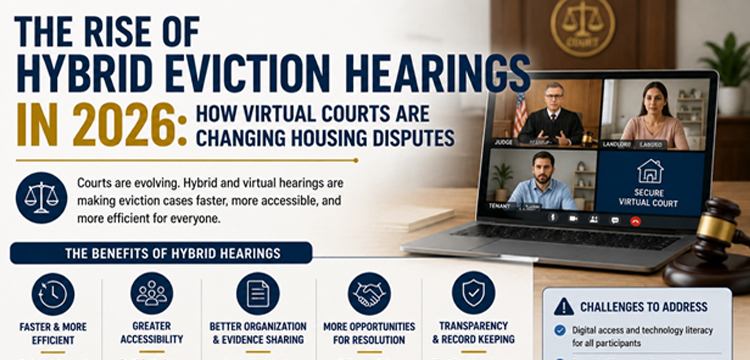
The legal system surrounding eviction is undergoing a major transformation in 2026, with hybrid and virtual court hearings becoming increasingly common in housing disputes. What began as a temporary digital solution during periods of court disruption has now evolved into a long-term modernization strategy. Courts, landlords, tenants, and legal professionals are adapting to a system where eviction hearings can take place both in-person and online, creating faster and more accessible legal processes.
Hybrid eviction hearings allow participants to attend proceedings remotely through secure digital platforms while still maintaining the option for physical courtroom appearances when necessary. This flexibility is helping courts reduce case backlogs and improve scheduling efficiency. In many regions, housing tribunals and civil courts are now prioritizing digital case management systems that allow documents, notices, and evidence to be uploaded electronically before hearings begin.
For landlords, virtual hearings offer significant operational advantages. Travel time, administrative delays, and scheduling conflicts are reduced, allowing property disputes to move forward more efficiently. Digital systems also make it easier to organize evidence such as tenancy agreements, rent records, payment histories, and communication logs. As a result, landlords can present clearer documentation and prepare cases more effectively.
Tenants are also benefiting from greater accessibility. Many renters previously struggled to attend court due to work commitments, transportation issues, or childcare responsibilities. Remote participation removes many of these barriers, enabling tenants to join hearings from home or legal support centers. This has improved attendance rates and allowed more tenants to actively participate in defending or resolving their cases.
Another important development is the growing use of online mediation before formal hearings take place. Courts and housing authorities are encouraging both parties to attempt digital dispute resolution sessions aimed at reaching agreements before legal action progresses further. In many cases, repayment plans or tenancy arrangements are resolved through mediation, avoiding the need for full eviction proceedings altogether.
Technology is also improving transparency in the legal process. Automated notifications, digital scheduling systems, and real-time case updates help both landlords and tenants stay informed. Hearing recordings and digital transcripts are increasingly being stored securely, creating clearer records and reducing misunderstandings regarding court decisions.
However, the transition to hybrid hearings is not without challenges. Digital access remains a concern, particularly for vulnerable tenants who may lack reliable internet connections or familiarity with online platforms. Legal experts also continue to debate whether virtual hearings can fully replicate the fairness and human interaction of traditional courtrooms. Ensuring equal access and maintaining procedural fairness remain essential priorities as courts continue to modernize.
Cybersecurity and data privacy are additional concerns. Housing disputes involve sensitive personal and financial information, requiring courts and digital platforms to maintain strict security standards to protect all parties involved.
Despite these challenges, hybrid eviction hearings are becoming a permanent feature of the housing legal system. The combination of convenience, efficiency, and accessibility is reshaping how disputes are handled across the rental sector. In 2026, eviction proceedings are no longer confined to physical courtrooms they are increasingly part of a digitally connected legal environment designed to streamline processes while improving access to justice for everyone involved.
