
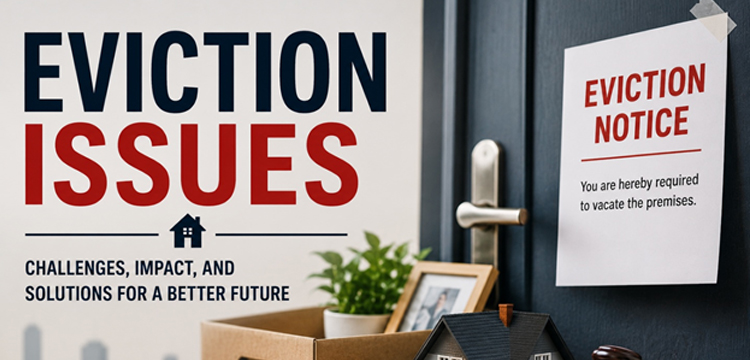
Eviction issues continue to rise across many countries as housing affordability becomes one of the biggest challenges facing modern society. Increasing rent prices, inflation, unemployment, and financial instability have made it difficult for many tenants to maintain secure housing. At the same time, landlords are also facing economic pressure due to unpaid rent, rising property maintenance costs, and lengthy legal procedures. As a result, eviction disputes are becoming more frequent and more complex than ever before.
One of the primary causes of eviction is non-payment of rent. Many families live on limited incomes and struggle to balance housing costs with daily living expenses such as food, transportation, healthcare, and education. Even temporary financial setbacks, including job loss or medical emergencies, can place tenants at risk of falling behind on rent payments. In cities where housing costs continue to increase rapidly, tenants often have little financial flexibility, making eviction a constant threat for vulnerable households.
Another major issue contributing to eviction disputes is poor communication between landlords and tenants. In some cases, lease agreements are not clearly understood, leading to disagreements over responsibilities, payment terms, maintenance obligations, or property usage. Small misunderstandings can quickly develop into legal conflicts when both parties fail to communicate effectively. Many tenants are unfamiliar with housing laws, while some landlords may not fully follow legal procedures during disputes.
Illegal eviction practices have also become a serious concern in many regions. Some property owners attempt to remove tenants without proper legal notice or court approval by changing locks, disconnecting electricity or water services, or applying pressure to force tenants out of the property. Such actions are unlawful in many jurisdictions and can create emotional stress, financial hardship, and insecurity for affected families. Tenants who lack legal knowledge or financial resources are often unable to defend themselves properly against unfair treatment.
Landlords also face difficulties when dealing with problematic tenancy situations. Delayed rental payments can affect mortgage obligations, property taxes, and maintenance expenses. In some cases, legal eviction procedures take several months before courts reach a final decision, creating financial losses for property owners. Small landlords who depend heavily on rental income are particularly vulnerable during prolonged disputes. This has led to increasing frustration among property owners trying to manage housing responsibly while complying with legal regulations.
The social impact of eviction extends far beyond losing a home. Families facing eviction often experience anxiety, depression, and uncertainty about their future. Children may face disruptions in education due to relocation, while adults may struggle to maintain stable employment without secure housing. Eviction records can also make it more difficult for individuals to rent homes in the future, creating long-term financial and social consequences. Communities with high eviction rates often experience increased homelessness, poverty, and social instability.
Governments and housing organizations are now focusing on solutions aimed at reducing eviction rates and promoting housing stability. Rental assistance programs, tenant education initiatives, mediation services, and affordable housing projects are becoming increasingly important. Encouraging communication between landlords and tenants before legal action begins can help resolve disputes early and reduce unnecessary evictions. Many experts believe that balanced housing policies are essential to protect both tenant rights and landlord interests.
As economic conditions continue to evolve, eviction issues remain one of the most significant housing challenges of modern times. Addressing these problems requires cooperation between governments, landlords, tenants, and legal institutions to ensure fair treatment, stable housing opportunities, and stronger communities for the future.
