
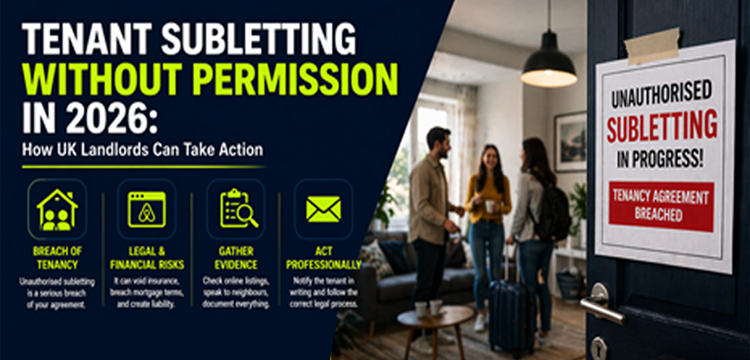
An increasingly common issue landlords are facing in 2026 is tenants subletting their rental property without permission. With the rise of short-term rental platforms and side-income opportunities, some tenants are renting out rooms—or even entire properties—without the landlord’s knowledge. While this may seem like a minor breach at first, it can create serious legal, financial, and compliance risks.
Many landlords only discover unauthorised subletting after noticing unusual activity, such as frequent guest turnover, complaints from neighbours, or unexpected wear and tear in the property. In some cases, properties are listed online as short-term rentals, generating income for the tenant while the landlord remains unaware. This not only breaches the tenancy agreement but may also violate mortgage terms, insurance policies, or local regulations.
Legally, most tenancy agreements clearly prohibit subletting without the landlord’s consent. However, enforcing this clause requires evidence. Simply suspecting subletting is not enough. Landlords must be able to demonstrate that the tenant has allowed others to occupy the property in exchange for payment or other benefits. This can include online listings, witness statements, or documented patterns of occupancy.
One of the major risks associated with unauthorised subletting is loss of control over who is living in the property. Unknown occupants may not follow tenancy rules, may cause damage, or may even create safety risks. Additionally, if something goes wrong—such as property damage or legal issues—the landlord may find it difficult to hold the original tenant accountable if proper documentation is not in place.
Another complication is insurance. Many landlord insurance policies become invalid if the property is sublet without approval. This means that in the event of damage, fire, or other incidents, the landlord could face significant financial loss without coverage. Similarly, mortgage agreements often include clauses restricting subletting, which could lead to further complications if breached.
When dealing with this issue, landlords must act carefully and within the law. The first step is to gather evidence and confirm the situation. Once confirmed, the tenant should be contacted formally in writing, outlining the breach of tenancy agreement and requesting an immediate explanation. Clear communication is essential, as it demonstrates that the landlord is addressing the issue professionally.
If the tenant admits to subletting or fails to respond, landlords may have grounds to take further action. In many cases, unauthorised subletting can be treated as a breach of tenancy, potentially supporting a Section 8 eviction claim. However, as with all eviction-related matters in 2026, success depends heavily on proper documentation and compliance with legal procedures.
It is also important for landlords to avoid taking direct action against subtenants. Even if they are not authorised occupants, removing them without following the correct legal process can lead to serious legal consequences. The focus should always remain on enforcing the agreement with the original tenant.
Given the increasing complexity of such cases, many landlords are turning to specialists like Evictors for support. Professional handling ensures that evidence is collected correctly, notices are served properly, and any legal action is carried out in compliance with current regulations.
In 2026, unauthorised subletting is no longer a rare issue—it is a growing trend that landlords must be prepared to address. By acting early, documenting everything, and following the correct legal process, landlords can protect their property, maintain control, and avoid costly complications.
