
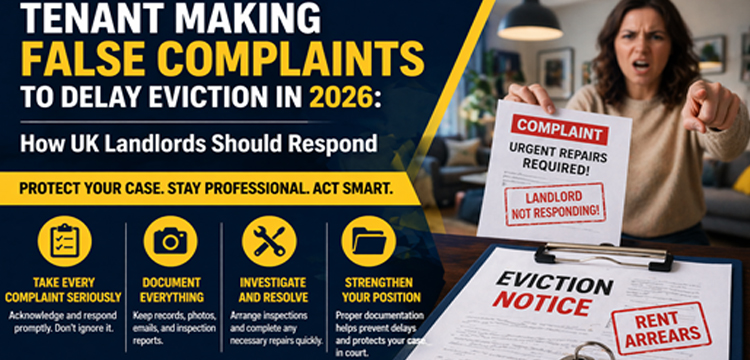
In 2026, an increasing number of landlords are encountering tenants who raise repeated or exaggerated complaints as a way to delay eviction proceedings. While tenant rights are rightly protected under UK law, some tenants are now using the system strategically filing complaints about repairs, safety issues, or landlord conduct at critical stages of the eviction process.
For landlords, this creates a complex and frustrating situation. What may begin as a straightforward rent arrears case can quickly become delayed due to investigations, inspections, or legal defences raised by the tenant. In many cases, landlords are unsure whether the complaint is genuine or simply a tactic to buy time.
The difficulty lies in the fact that all complaints must be taken seriously. Even if a landlord strongly believes a claim is false or exaggerated, ignoring it can severely weaken their position. Courts in 2026 are placing significant emphasis on tenant welfare and property conditions, meaning any unresolved complaint can impact the outcome of an eviction case.
One of the most common scenarios involves tenants raising disrepair issues after receiving an eviction notice. For example, a tenant may suddenly report damp, heating problems, or structural concerns that were never previously mentioned. This can trigger local council involvement or delay court proceedings while the issue is assessed. In some cases, even minor issues can be used to challenge the validity of the eviction.
Another tactic landlords are facing is repeated complaints about access, communication, or alleged harassment. These claims can complicate proceedings and create additional pressure, especially if there is little documented evidence to counter them. Without proper records, it becomes difficult for landlords to prove that they acted reasonably and within the law.
The key to handling this situation is not to dismiss complaints, but to respond to them in a structured and professional way. Every complaint should be acknowledged promptly and investigated, regardless of whether it appears genuine. Landlords should arrange inspections, document findings, and carry out any necessary repairs without delay. This demonstrates compliance and reduces the risk of the complaint being used against them.
Documentation plays a critical role in these cases. Landlords should keep detailed records of all communication, including emails, messages, and notices. Photographic evidence, contractor reports, and inspection logs can also help demonstrate that the property is being properly maintained. In court, this evidence can be the difference between a delayed case and a successful possession order.
Timing is another important factor. Many false or exaggerated complaints arise only after eviction proceedings have begun. Courts are aware of this pattern, but landlords must still show that they responded appropriately. Ignoring a late complaint simply because it seems suspicious can backfire and lead to further delays.
In some cases, landlords may also need to involve local authorities or independent inspectors to verify the condition of the property. This adds an extra layer of credibility and can help counter unsupported claims made by tenants.
Due to the increasing complexity of these situations in 2026, many landlords are turning to professional eviction specialists such as Evictors. With expert support, landlords can ensure that complaints are handled correctly, evidence is properly documented, and eviction proceedings remain on track.
Ultimately, false or exaggerated complaints are becoming a common tactic, but they can be managed effectively with the right approach. Landlords who remain professional, respond promptly, and maintain strong documentation will be in a far better position to protect their case and successfully regain possession of their property.
