
What Landlords Need to Know
In 2026, one of the most debated issues in the rental market is the future of no-fault evictions. Traditionally, no-fault evictions have allowed landlords to reclaim their property without proving tenant wrongdoing often for reasons such as selling the property, moving in, or redevelopment. However, growing concerns around tenant security and housing stability are driving significant changes to how and when these evictions can be used.
Across many regions, governments are tightening regulations to limit the misuse of no-fault evictions. Authorities are increasingly requiring landlords to provide valid, documented reasons when ending a tenancy, even in cases that were previously considered “no-fault.” This shift aims to prevent situations where tenants are displaced unfairly, particularly in high-demand housing markets where properties can quickly be re-let at higher rents.
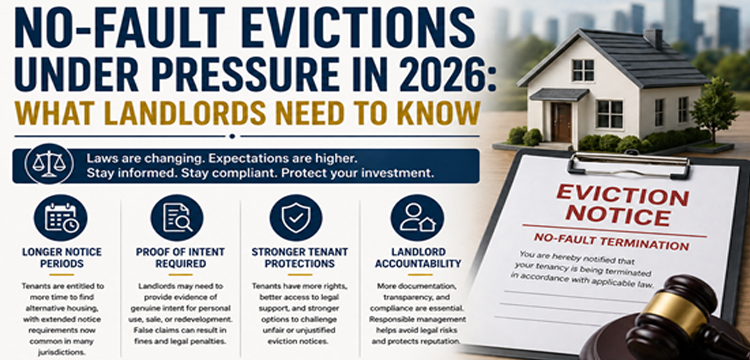
One major change is the introduction of longer notice periods. Tenants are now often given extended timeframes to find alternative accommodation, reducing the immediate pressure and disruption caused by sudden eviction notices. While this provides tenants with greater security, it also requires landlords to plan further in advance when making decisions about their property.
Another key development is the growing emphasis on proof of intent. For example, if a landlord claims they need the property for personal use or sale, they may now be required to demonstrate that this intention is genuine. In some jurisdictions, penalties are being introduced for landlords who evict tenants under false pretenses and then re-rent the property shortly afterward. This added layer of accountability is reshaping how landlords approach tenancy terminations.
For landlords, these changes mean a shift toward more structured and transparent property management practices. Proper documentation, clear communication, and compliance with evolving legal frameworks are now essential. Relying on outdated assumptions about eviction rights can lead to legal complications, financial penalties, and reputational damage.
At the same time, tenants are gaining stronger protections and more confidence in challenging eviction notices. Access to legal resources, tenant advocacy groups, and digital platforms has made it easier for renters to understand their rights and respond effectively. This is contributing to a more balanced dynamic between landlords and tenants, where decisions are increasingly scrutinized and justified.
However, the tightening of no-fault eviction rules also raises concerns among property owners. Some landlords worry that reduced flexibility may discourage investment in rental properties or make it harder to manage legitimate business needs. Balancing tenant protection with landlord rights remains a complex issue that policymakers continue to navigate.
Ultimately, the decline of traditional no-fault evictions signals a broader shift in the housing sector. Stability, fairness, and accountability are becoming central priorities, and both landlords and tenants must adapt to this evolving environment. In 2026, eviction is no longer just about legal rights it is about responsible property management and ensuring that housing practices align with modern expectations of fairness and transparency.
