
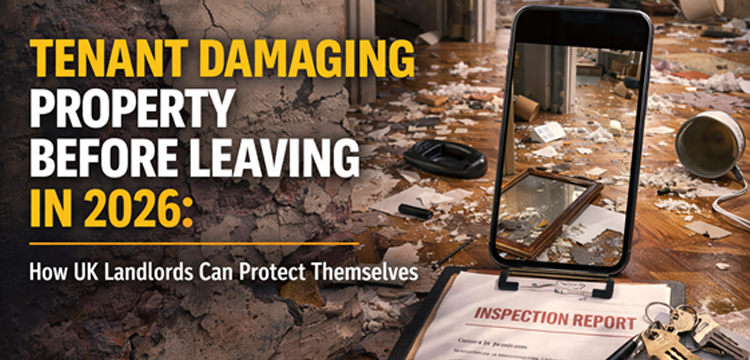
A serious and costly issue landlords are increasingly facing in 2026 is tenants causing damage to the property just before leaving or after receiving an eviction notice. What may already be a stressful eviction process can quickly turn into a financial burden when landlords discover broken fixtures, damaged walls, missing items, or even intentional vandalism.
This problem is becoming more common, particularly in situations involving rent arrears or disputes. Some tenants, knowing they are about to leave, may neglect the property or in worse cases, deliberately damage it. For landlords, this not only results in repair costs but also delays in re-letting the property, leading to further financial loss.
One of the biggest challenges in these situations is proving that the damage was caused by the tenant. Without proper documentation, it can be difficult to distinguish between fair wear and tear and actual damage. This is where many landlords face problems, especially if they did not carry out detailed inventory checks at the start of the tenancy.
The key to protecting against this issue starts long before the problem arises. A well-documented inventory, including photographs and condition reports, is essential. This provides clear evidence of the property’s condition at the beginning of the tenancy and can be used to compare against its state at the end.
Regular inspections also play an important role. Landlords who carry out periodic property checks are more likely to identify issues early and address them before they escalate. In 2026, maintaining a clear inspection record can also strengthen a landlord’s position if disputes arise later.
When damage is discovered, landlords should act quickly but carefully. The first step is to document everything with photographs, videos, and written descriptions. This evidence is crucial if the landlord intends to make deductions from the deposit or pursue further legal action. It is also important to obtain repair quotes to demonstrate the financial impact of the damage.
In cases where the deposit does not cover the full cost, landlords may need to take additional steps to recover losses. This could involve pursuing the tenant or guarantor through legal channels. However, success depends heavily on the quality of evidence and whether the correct procedures were followed throughout the tenancy.
Another common mistake landlords make is confronting tenants aggressively or making deductions without proper justification. This can lead to disputes, particularly through deposit protection schemes, where decisions are based strictly on evidence and compliance.
In 2026, courts and dispute resolution services are placing increasing importance on documentation and fairness. Landlords must be able to clearly demonstrate that the damage goes beyond normal wear and tear and that all actions taken are reasonable and justified.
Because of the financial and legal risks involved, many landlords choose to work with professionals such as Evictors. Expert support ensures that the eviction process is handled correctly, evidence is properly gathered, and landlords are guided on the best course of action to recover losses.
Ultimately, property damage at the end of a tenancy is not just an inconvenience it can significantly impact a landlord’s finances and timelines. By taking preventative measures, maintaining strong documentation, and acting professionally, landlords can protect themselves and minimise losses even in difficult situations.
