
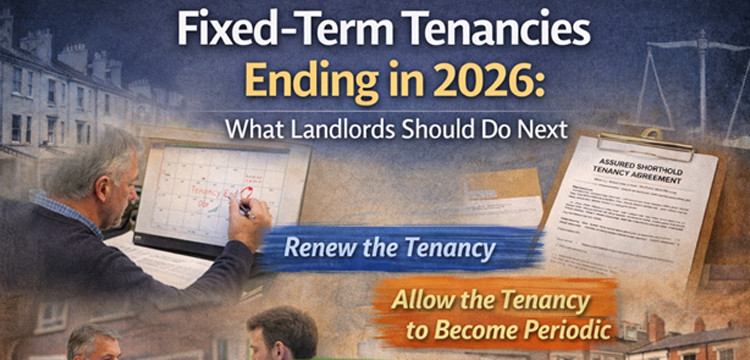
As we move through 2026, many landlords are reaching the end of fixed-term tenancy agreements and asking the same question: What happens next?
With continued debate around rental reform and changing notice requirements, understanding your options at the end of a fixed term is essential.
Option 1: Renew the Tenancy
If the tenant has complied with the terms and rent is paid on time, renewing the tenancy may be the simplest solution.
A new fixed-term agreement provides certainty for both parties. It also allows landlords to review:
- Rent levels
- Updated terms
- Compliance documents
- Property conditions
A fresh agreement ensures clarity and reduces disputes later.
Option 2: Allow the Tenancy to Become Periodic
Under the Housing Act 1988, many assured shorthold tenancies automatically become statutory periodic tenancies when the fixed term ends.
This gives flexibility but reduces long-term certainty. Landlords should carefully consider whether a rolling tenancy suits their plans.
Option 3: Seek Possession Lawfully
If a landlord intends to regain possession at the end of the term, strict compliance rules apply.
Depending on the circumstances, possession may involve:
- Serving a valid notice under Section 21 (subject to compliance requirements).
- Serving a Section 8 Notice where grounds apply.
Deposit protection, gas safety certification and prescribed information remain critical. Courts will not overlook technical errors.
Planning Ahead in 2026
Rental law is increasingly structured and scrutinised. Landlords who prepare early reviewing tenancy end dates months in advance avoid last-minute pressure and legal mistakes.
Evictors supports landlords with renewals, compliant notices and possession claims where necessary.
Because the end of a tenancy should be a managed transition not a legal emergency.
