
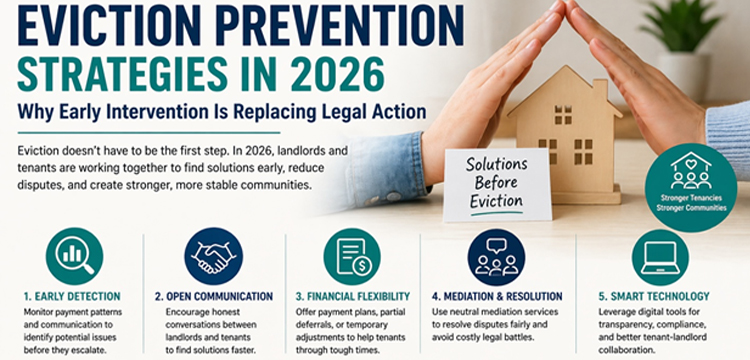
In 2026, the conversation around eviction is no longer focused solely on legal procedures—it is increasingly centered on prevention. Rising housing costs, economic fluctuations, and evolving tenant expectations have pushed landlords and property managers to rethink traditional approaches. Instead of reacting when rent is overdue or lease terms are violated, the industry is shifting toward proactive eviction prevention strategies that aim to resolve issues before they escalate.
One of the most impactful changes is the adoption of early intervention frameworks. Property managers are now closely monitoring payment patterns and tenant communication behavior to identify warning signs at an early stage. A missed payment is no longer treated as an immediate breach leading to eviction; instead, it triggers a structured response process. This may include automated reminders, personalized outreach, and flexible payment arrangements designed to help tenants recover without facing displacement.
Financial flexibility has become a cornerstone of modern eviction prevention. Landlords are increasingly offering short-term solutions such as payment plans, partial deferrals, or temporary rent adjustments during periods of financial hardship. These options not only help tenants stay in their homes but also reduce the costs associated with tenant turnover, property vacancies, and legal proceedings. In many cases, retaining a tenant through support measures proves far more cost-effective than pursuing eviction.
Another key development is the rise of mediation and conflict resolution services. Neutral third-party mediators are being used to facilitate discussions between landlords and tenants, especially in cases involving disputes over maintenance issues, lease interpretations, or payment delays. Mediation helps both parties reach mutually acceptable solutions without entering lengthy and expensive legal battles. As a result, relationships are preserved, and outcomes are often more sustainable.
Technology is also playing a major role in strengthening prevention strategies. Digital platforms now provide tenants with easy access to their payment history, lease agreements, and communication records. This transparency reduces misunderstandings and ensures that both parties are aligned on expectations. Additionally, automated compliance systems guide landlords through proper procedures, ensuring that any action taken is fair and legally sound.
Governments and housing authorities are also contributing to this shift by encouraging eviction prevention programs. In many regions, financial assistance schemes, rent support initiatives, and tenant protection policies are being introduced to reduce eviction rates. These measures reflect a broader recognition that stable housing is essential for economic and social well-being.
However, eviction prevention is not without its challenges. Some landlords remain concerned about the risks of extended payment delays, while others face difficulties balancing compassion with financial sustainability. At the same time, tenants must take responsibility for communication and cooperation to ensure that support measures are effective. Ultimately, the future of eviction management lies in balance. Prevention strategies are proving that with the right combination of technology, communication, and flexibility, many eviction cases can be avoided altogether. For landlords, this means more stable occupancy and reduced costs. For tenants, it offers greater security and a fair chance to overcome temporary hardships. In 2026, eviction is no longer just a legal endpoint it is increasingly a scenario that both sides are working together to prevent.
