
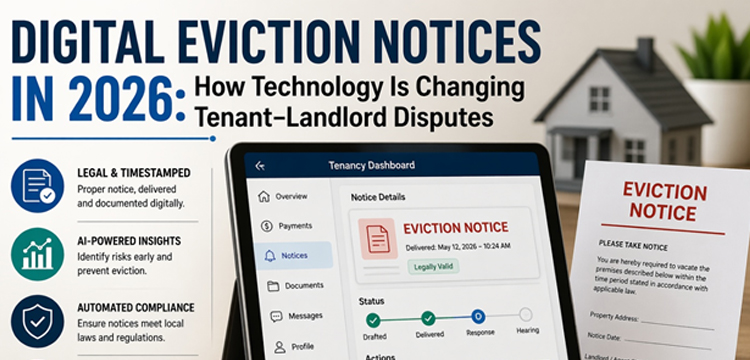
Eviction has traditionally been a paper-heavy, slow, and often emotionally charged legal process. However, in 2026, the landscape is shifting rapidly as digital property management systems, AI-based tenancy monitoring, and automated legal workflows begin to reshape how landlords and tenants interact. One of the most significant changes is the rise of digital eviction notices, which are now being used alongside traditional legal channels in many property management systems.
Digital eviction notices are not simply emails or PDF letters sent to tenants. In modern systems, they are legally structured, timestamped, and integrated with tenancy databases that track rent payments, lease violations, and communication history. This creates a transparent digital trail that reduces disputes over whether proper notice was given. For landlords, this improves efficiency and reduces administrative delays, while tenants benefit from clearer documentation and easier access to their tenancy records.
At the same time, AI-powered property management tools are increasingly being used to prevent eviction scenarios before they escalate. These systems analyze payment behavior patterns, flagging tenants who may be at risk of falling behind on rent. Instead of immediately moving toward eviction, landlords are now prompted to offer restructuring options such as payment plans or temporary rent adjustments. This shift is not only improving tenant retention but also reducing legal costs and vacancy periods for property owners.
Another important development is the integration of automated legal compliance checks. Eviction laws vary significantly across regions, and mistakes in notice periods or documentation can lead to legal penalties for landlords. Modern platforms now automatically verify whether eviction grounds meet local legal standards before a notice is issued. This reduces human error and ensures that eviction processes are compliant from the beginning.
For tenants, digital systems also provide stronger protection. Many platforms now include tenant dashboards where individuals can view notices, respond formally, and upload supporting evidence such as payment receipts or maintenance complaints. This improves communication transparency and reduces misunderstandings that often escalate into disputes.
Despite these advancements, challenges remain. Not all tenants have equal access to digital tools, and there are ongoing concerns about data privacy and automated decision-making in sensitive housing matters. Critics argue that over-reliance on AI could lead to unfair profiling or premature escalation of eviction warnings if systems are not carefully regulated.
Overall, the future of eviction processes is becoming more structured, data-driven, and preventive rather than reactive. While traditional legal frameworks still govern the final decision-making, technology is increasingly shaping how early-stage disputes are managed. For landlords and tenants alike, adapting to these digital systems is becoming essential to navigating the modern rental landscape effectively.
