
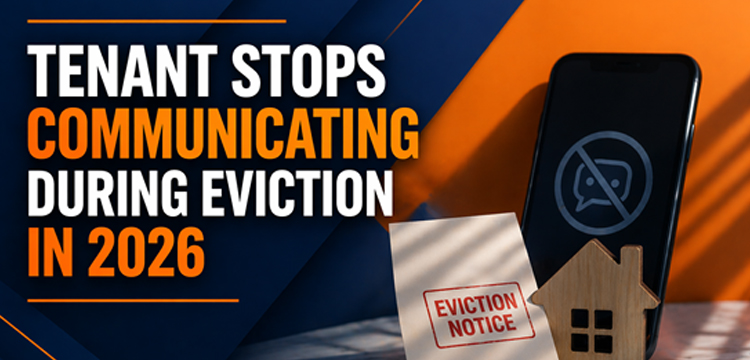
A frustrating and increasingly common issue landlords are facing in 2026 is tenants completely cutting off communication during the eviction process. Calls go unanswered, emails are ignored, and even formal notices receive no response. This silence creates uncertainty and delays, leaving landlords unsure about the next step and concerned about making legal mistakes.
At first, many landlords assume the tenant will eventually respond or vacate the property on their own. However, in most cases, lack of communication is not accidental it is often a deliberate tactic used to delay the process. By avoiding contact, tenants can slow down proceedings, create confusion, and sometimes strengthen their position if the landlord fails to follow proper legal procedures.
The biggest challenge in these situations is that eviction laws in the UK require strict compliance, regardless of whether the tenant is cooperating or not. Landlords cannot skip steps simply because the tenant is unresponsive. Every notice must still be properly served, timelines must be followed, and legal processes must be completed accurately. Failure to do so can result in delays or even case dismissal.
One of the most common mistakes landlords make is relying too heavily on informal communication. Repeated phone calls or messages without formal written notices do not hold much value in court. If the tenant chooses to ignore them, the landlord may be left without sufficient evidence to prove that proper steps were taken.
When a tenant stops communicating, landlords must immediately shift to a formal, documented approach. This means serving notices through legally recognised methods, such as recorded delivery or process servers, and keeping proof of service. Even if the tenant does not respond, the law recognises that notice has been given if it has been served correctly.
Another issue that arises in these cases is uncertainty about the tenant’s intentions. Some landlords are unsure whether the tenant has abandoned the property, is still living there, or is deliberately avoiding contact. Acting on assumptions can be risky, as taking possession without proper confirmation may lead to legal complications. This is why following the full legal eviction process is essential, even in the absence of communication.
In 2026, courts are placing significant emphasis on procedure and documentation. Landlords must demonstrate that they have followed every required step correctly, regardless of tenant behaviour. Silence from the tenant does not simplify the process—it often makes it more important to get everything right.
To move forward effectively, landlords should focus on progressing the eviction through legal channels rather than waiting for a response. Once the appropriate notice period has expired, the next step is to apply for a possession order through the courts. If the tenant continues to ignore proceedings, the court can still grant possession based on the evidence provided.
However, handling this process alone can be overwhelming, especially when dealing with strict timelines, legal paperwork, and court procedures. This is why many landlords choose to work with specialists such as Evictors. Professional eviction services ensure that notices are served correctly, documentation is complete, and the case progresses without unnecessary delays.
Ultimately, a tenant’s silence does not stop the eviction process but it does increase the risk of mistakes if not handled properly. Landlords who rely on formal procedures, maintain clear records, and take timely action will be able to move forward confidently, even when the tenant refuses to engage.
