
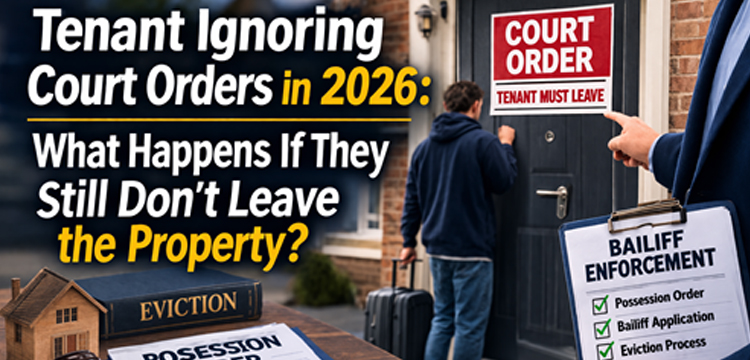
A serious issue landlords are increasingly facing in 2026 is tenants who refuse to leave the property even after a court has granted a possession order. Many landlords assume that once the court decision is made, the process is over. In reality, this is often where the most frustrating delays begin.
When a possession order is granted, the court typically gives the tenant a specific timeframe—usually 14 days—to vacate the property. However, in many cases, tenants simply ignore this order and continue to occupy the premises. This leaves landlords in a difficult position, as they cannot legally remove the tenant themselves, despite having a court ruling in their favour.
It is important to understand that a possession order does not automatically result in eviction. If a tenant refuses to leave, landlords must take the additional step of applying for bailiff enforcement. This is where many delays occur, as court bailiffs often have significant backlogs, especially in 2026 where demand for enforcement has increased.
One of the biggest mistakes landlords make at this stage is attempting to take matters into their own hands. Actions such as changing locks, removing belongings, or pressuring the tenant to leave can be considered unlawful eviction. Even with a court order in place, these actions are illegal and can result in serious legal consequences, including fines or compensation claims.
Instead, landlords must follow the correct legal process by applying for a warrant of possession. Once approved, court bailiffs will schedule an eviction date and carry out the removal legally. While this process can be slow, it is the only lawful way to regain possession if the tenant refuses to leave voluntarily.
Another challenge landlords face is the financial impact of these delays. Rent arrears often continue to grow, and the property remains unavailable for new tenants. In some cases, landlords may also face ongoing costs such as mortgage payments, maintenance, and legal fees, all while receiving no rental income.
In 2026, courts are placing increased emphasis on due process and tenant rights, which means landlords must be fully compliant at every stage. Any mistake, even after obtaining a possession order, can result in further delays or complications. This makes it essential to handle enforcement carefully and professionally.
To reduce delays, landlords should act quickly after the possession date has passed. Applying for bailiff enforcement without unnecessary delay can help secure an earlier eviction date. Keeping all documentation in order and ensuring that the original case was correctly handled will also prevent additional setbacks.
Because of the complexity and frustration involved in post-court eviction stages, many landlords choose to work with specialists such as Evictors. Professional support can help manage the enforcement process, ensure all legal requirements are met, and minimise delays in regaining possession.
Ultimately, a possession order is not the end of the eviction process—it is simply another step. Landlords must be prepared for the possibility that tenants may still refuse to leave and understand the correct legal route to resolve the situation. By following the proper procedures and avoiding unlawful actions, landlords can protect themselves and successfully regain control of their property.
