
Introduction
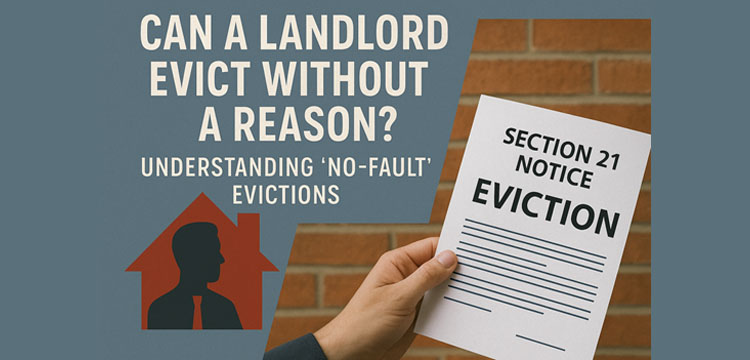
In the UK rental market, the Section 21 notice has long been a topic of debate. Often referred to as a “no-fault eviction,” this legal mechanism allows a landlord to evict a tenant without having to provide a specific reason. But what does this mean in practice? Is it truly eviction “without a reason”? And what are the rules landlords must follow to ensure the Section 21 eviction process is legal and effective?
In this blog, we’ll break down how the Section 21 notice works, the legal requirements, and what changes may be coming.
What is a Section 21 Notice?
Unlike Section 8 notices, which require the landlord to prove the tenant has breached the tenancy agreement (e.g., rent arrears or anti-social behaviour), Section 21 notices do not require any reason to be given. That’s why it’s often called a “no-fault eviction”.
Can a Landlord Evict Without a Reason?
Technically, yes. Under Section 21 of the Housing Act 1988, a landlord can regain possession of their property at the end of the tenancy term without providing a reason, as long as:
- The tenancy is an AST.
- A valid Section 21 notice has been served.
- The landlord has complied with all legal obligations (e.g., deposit protection, gas safety certificates, EPC).
- The correct notice period has been given.
This process is known as a no-fault eviction, because the tenant does not have to be “at fault” for the landlord to seek possession.
What Makes a Section 21 Notice Valid?
To be legally valid, a Section 21 notice must meet several strict criteria:
- The tenant’s deposit must be protected in a government-approved scheme.
- The tenant must have received the How to Rent Guide, EPC, and gas safety certificate.
- The property must be licensed if required under local housing rules.
- The correct form (Form 6A) must be used for tenancies started or renewed after 1 October 2015.
- At least 2 months’ notice must be given.
Failure to meet any of these requirements may result in the notice being deemed invalid and the eviction claim being dismissed by the court.
Is Section 21 Being Abolished?
Yes, the government has confirmed its intention to abolish Section 21 as part of the Renters (Reform) Bill. Once implemented, this change will mean landlords must provide a legal ground for eviction, even at the end of a tenancy.
This reform is aimed at creating a fairer rental market and enhancing tenant protection, but it has also raised concerns among landlords about how easily they’ll be able to regain possession of their properties in the future.
Conclusion
The Section 21 notice is currently one of the most common tools used by landlords to regain possession of their properties, thanks to its “no-fault” nature. However, landlords must tread carefully: serving a valid eviction notice requires full compliance with legal regulations. As the landscape evolves and reforms come into play, both landlords and tenants should stay informed about their rights and obligations.
